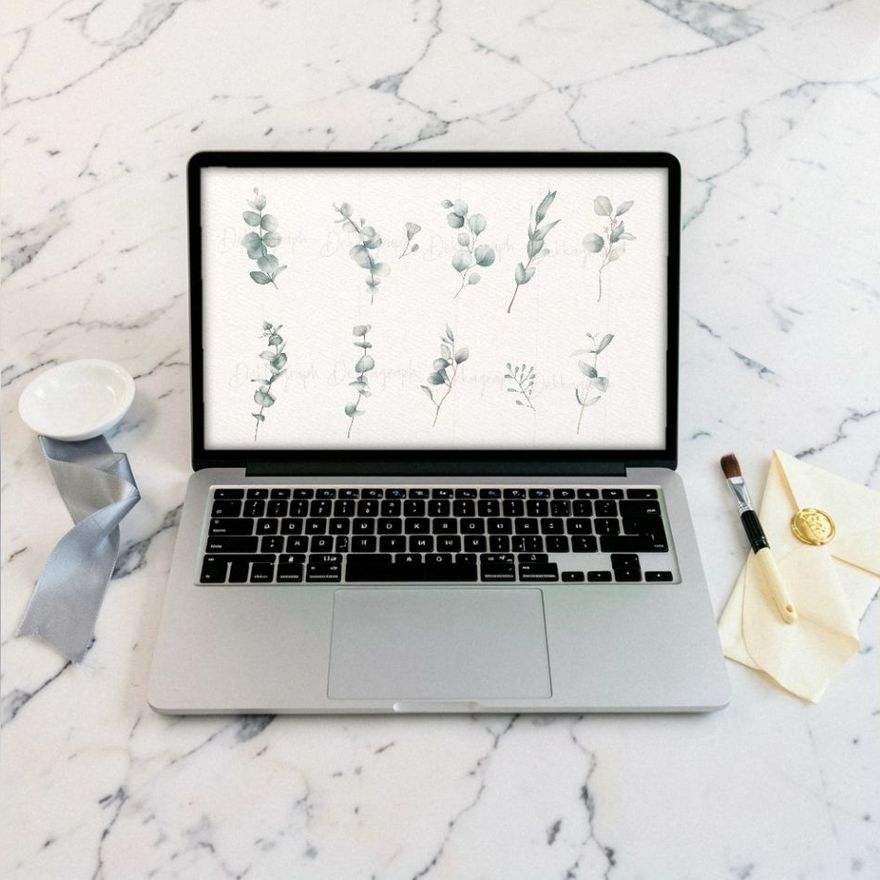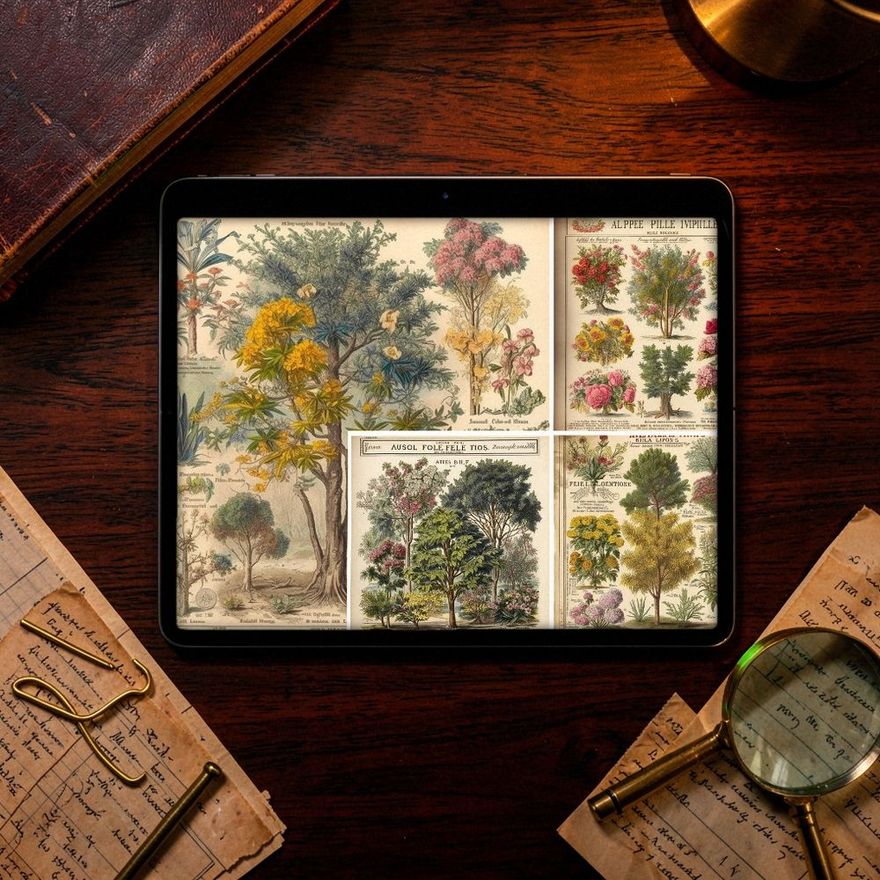
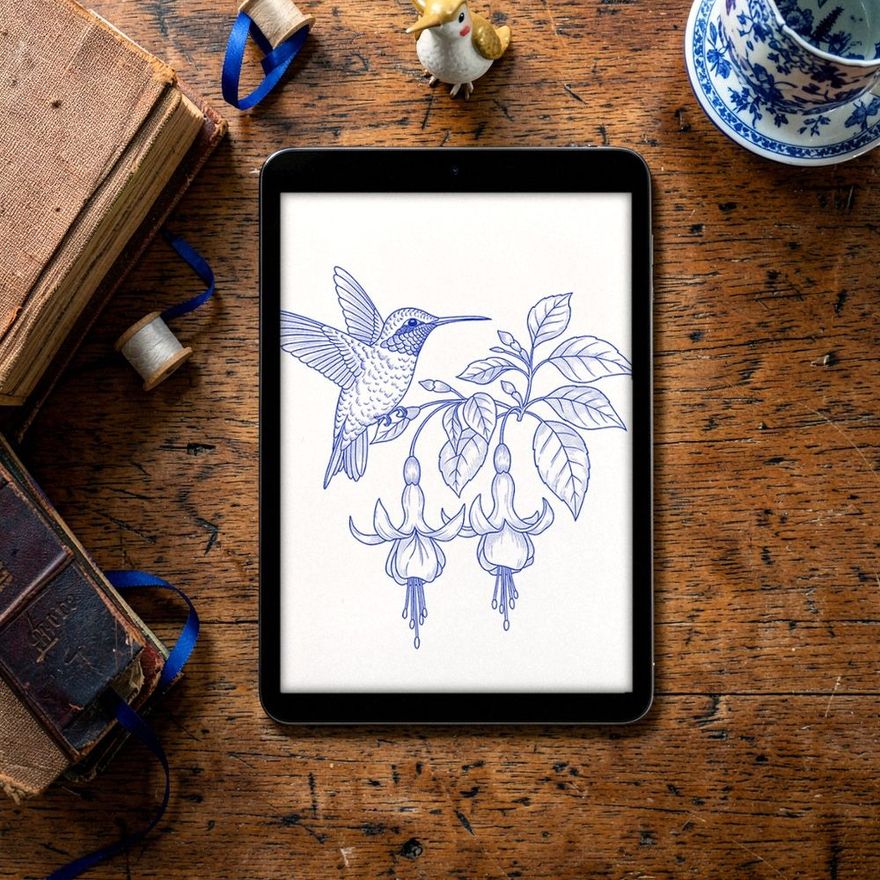

Botanical illustration began as a practical tool: pictures that helped physicians and apothecaries recognize the right plant. Over about fifteen centuries it moved from hand-copied manuscripts to woodcuts in printed herbals, then to hand-colored engravings in magazines and luxury flower books. The "vintage botanical" look that is so popular for prints, cards and journals today borrows from all of these stages: fine outlines, a plain background, the whole plant from root to flower, and a small Latin label. Knowing where the style comes from helps you use it well.
Herbals: Plants as Medicine
For most of history, the reason to study plants was medicine. The key ancient text was by Dioscorides, a Greek physician of the first century. UNESCO, which lists one of its manuscripts in its Memory of the World register, calls his work the most important pharmaceutical source of the ancient world, used through the Middle Ages, the Renaissance and later as a reference for medical practitioners.
That manuscript, the Vienna Dioscurides, was made at the beginning of the sixth century and is held by the Austrian National Library. UNESCO describes it as a masterpiece of book art from late antiquity. Its plant pages show the whole plant, including roots, leaves and fruits, a habit that botanical art kept for the next fifteen hundred years.
There was a weakness, though. Each copy of a manuscript was drawn by hand from an earlier copy, so pictures drifted further from real plants with every generation. The Linda Hall Library notes that a long tradition, going back to Dioscorides and Pliny, actually held that pictures tended to mislead in botany and were better left out.
Printed Herbals: Drawn From Life
Printing changed that. In 1530 the Strasbourg publisher Johann Schott issued Otto Brunfels' herbal with woodcuts based on paintings by the artist Hans Weiditz, made directly from living plants. According to the Linda Hall Library, the idea of lifelike pictures came from the publisher, not the author, and the images were like nothing seen before in a printed book of natural history.
In 1542 Leonhart Fuchs, a professor at Tübingen, went further. His De historia stirpium contained more than 500 woodcuts of plants drawn from life. Fuchs asked his artists to show ideal plants without flaws, and to combine stages of growth in one image, with flowers on one side and seeds on another. The Linda Hall Library points out that the woodcut lines were kept thin, giving outline rather than shading, because Fuchs planned for the prints to be colored by hand.
Those two choices, a perfect specimen and clean outlines meant for color, still define the botanical look.

Antique Botanical Plates
See the listing ↗
Mixed Fruits - Vintage Botanical Clipart
See the listing ↗
Field & Forest Vintage Botanical Clipart
See the listing ↗From the collection Vintage Botanical Illustrations. New Creative Fabrica members get 10 free downloads, and any of these can be one of them.
Engravings and the Botanical Magazine
Woodcuts gave way to engraving on metal, which allowed much finer lines and textures. Engraved plates, colored by hand with watercolor, became the standard for serious botanical books.
In London, the pharmacist and botanist William Curtis became demonstrator of plants at the Chelsea Physic Garden in 1771. From 1775 he issued, by subscription, a series of large plates of the wild plants around London; 434 plates were printed before publication stopped in 1798. In 1787 Curtis started a journal of new and garden plants that became known as the Botanical Magazine. The Linda Hall Library notes that it outlived Curtis and kept appearing until almost the end of the twentieth century. In the mid-1800s its plants were described by William Jackson Hooker, director of Kew Gardens, and illustrated by the Scottish artist Walter Hood Fitch.

Redouté and the Golden Age of Flower Painting
Not every botanical book was for scientists. Around 1800, flower painting reached high fashion. The Belgian artist Pierre-Joseph Redouté, who died in 1840 at the age of 80, painted the plants grown by Joséphine de Beauharnais, Napoleon's first wife, at her garden at Malmaison near Paris. His books include Jardin de la Malmaison (1803-04) and his best-known work, Les Roses (1817-24).
Redouté's roses are the reason so many "vintage rose" prints look the way they do: a single stem, petals rendered with soft color and fine detail, and nothing in the background.
Recognizing the Styles
| Style | Period | Look | Good for |
|---|---|---|---|
| Woodcut | 15th to 16th century | Bold, simple black outlines, often flat color | Rustic labels, folk designs, stamps |
| Hand-colored engraving | 17th to 19th century | Fine lines and hatching, washes of color | Framed prints, stationery, journal pages |
| Watercolor and gouache painting | 18th to 19th century | Soft blended color, detailed petals | Wall art, invitations |
| Scientific plate with parts | 18th to 20th century | Main stem plus separate details (seed, flower section), numbered | Kitchen prints, educational posters |
Dates in the table are broad; techniques overlapped for long periods.

Finding Old Plates
Many original books are now scanned and online. The Biodiversity Heritage Library, which holds more than 64 million pages of biodiversity literature, publishes illustrations on its Flickr photostream as well as complete books, and lets you download whole books, articles or single pages at different resolutions.
Before reusing an old image, check its status. The Biodiversity Heritage Library marks each item's copyright status and explains that, in the United States, works published 95 or more years before the current year are in the public domain. Cornell University Library's chart, updated January 1, 2026, lists works published in the US before 1931 as public domain. Both note, in different words, that the rules differ by country, and BHL labels some items with a Creative Commons non-commercial license rather than public domain. Clipart licenses explained covers these terms in more detail.
Raw scans also need work: yellowed paper, stains, bleed-through from the other side and no transparent background. Modern clipart sets in the vintage style, cleaned and cut out as PNGs, save that step. You will find them in the vintage botanical collection, with their own licenses.

Winter Birds & Botanical Clipart
See the listing ↗
Jungle Botanical Clipart Set
See the listing ↗
Blue Flowers, Botanical Clipart
See the listing ↗From the collection Vintage Botanical Illustrations. New Creative Fabrica members get 10 free downloads, and any of these can be one of them.
Paper and Frames for Botanical Prints
The antique look depends on the sheet as much as on the artwork. Ivory, parchment or kraft stock gives the warm background, and a set of matching frames with mats turns three or four plates into a gallery wall.
 Ivory cardstock, 65 lb coverLUXPaperSee it on Amazon
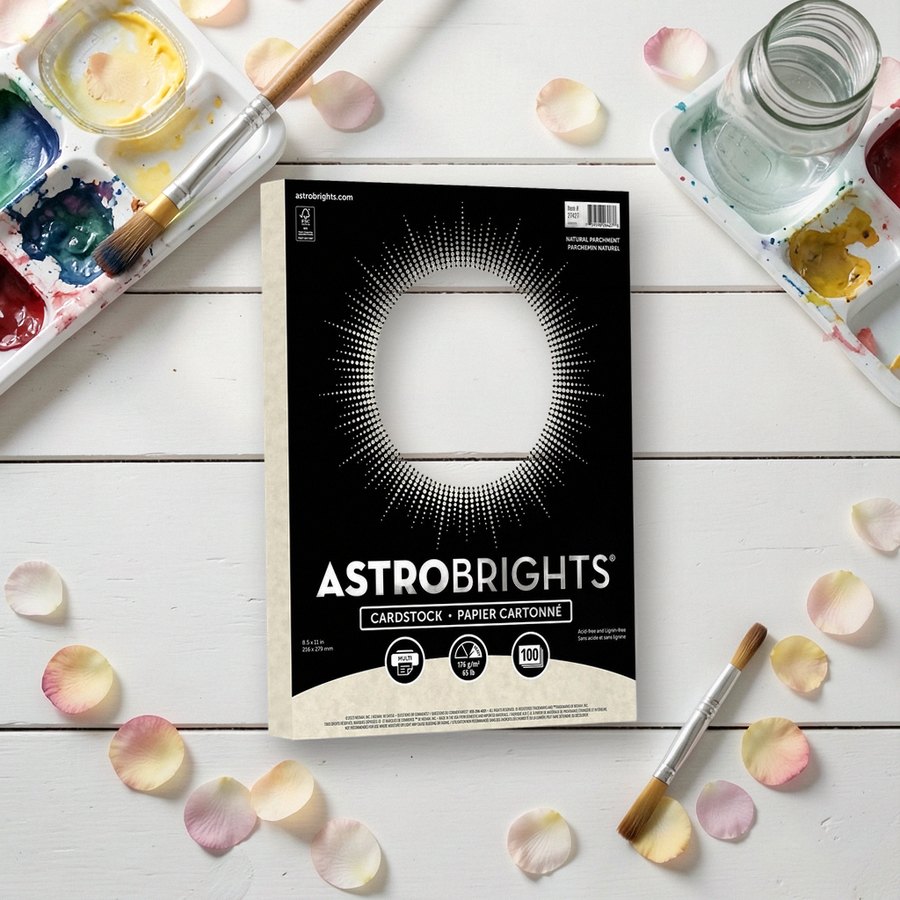 Parchment-look cardstock, 65 lbAstrobrightsSee it on Amazon
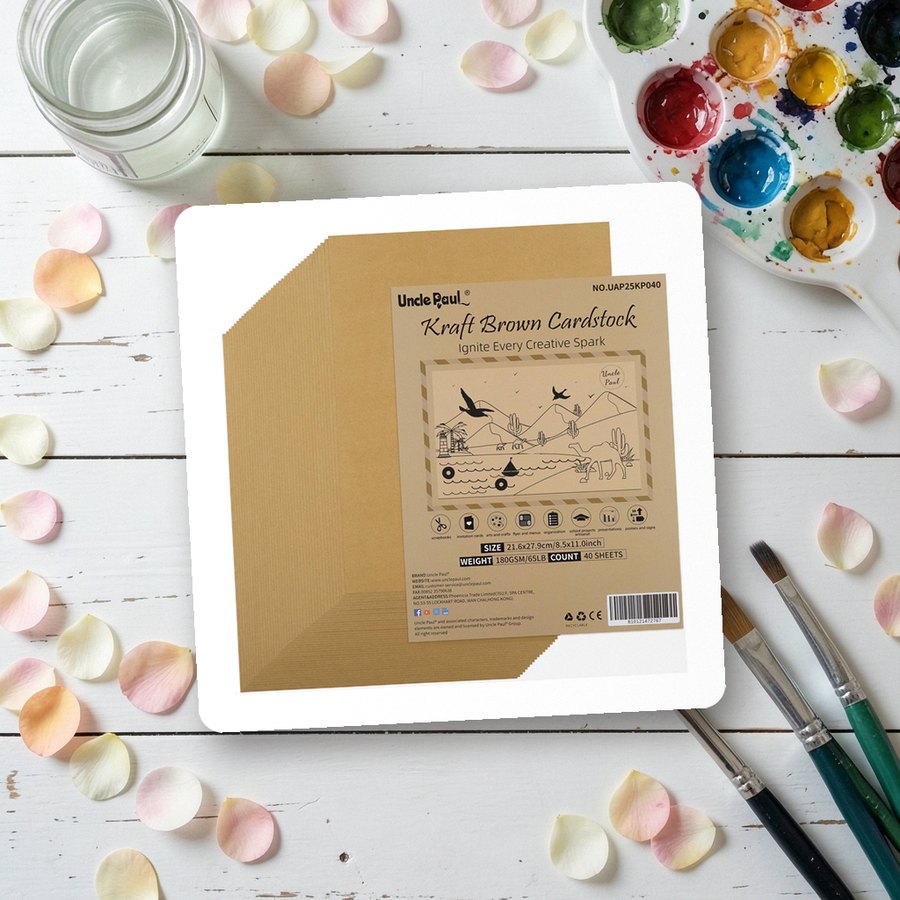 Brown kraft cardstock, 65 lbUncle PaulSee it on Amazon
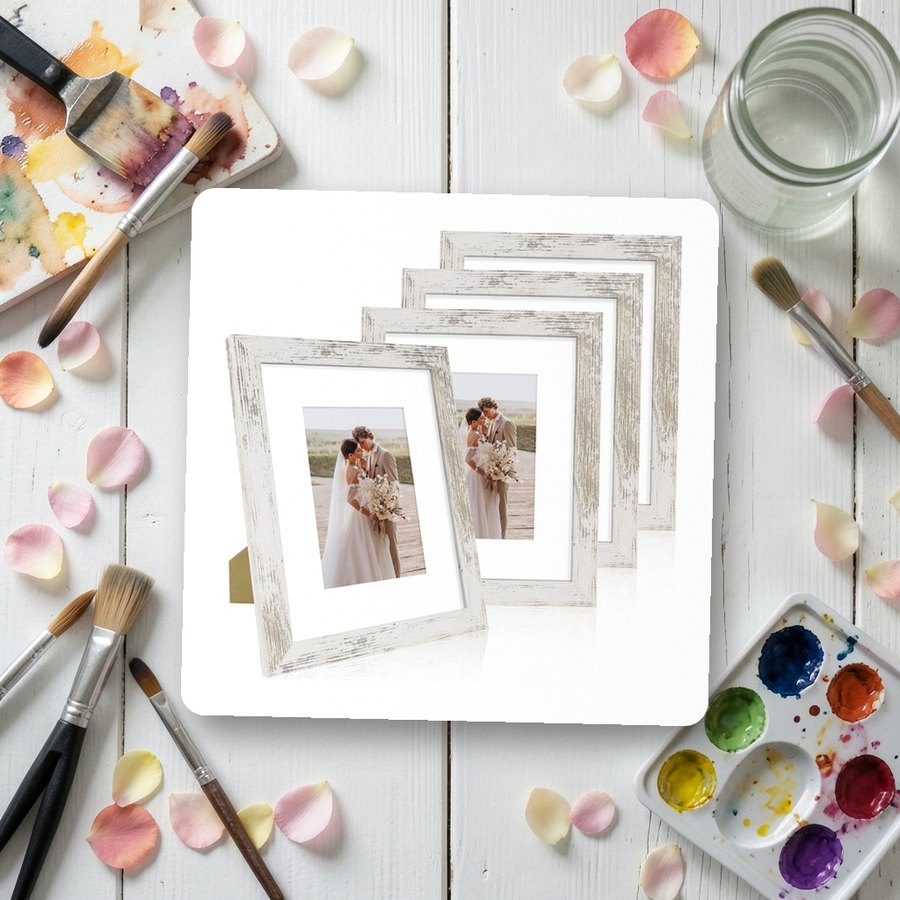 8x10 frames with mats, set of 4HongkeeSee it on Amazon
As an Amazon Associate we earn from qualifying purchases.
Using the Botanical Look Today
The style works because it is calm, orderly and clearly about nature. Some ways to use it:
- Gallery walls: three or four prints in matching frames, one plant each, with the Latin name below. Keep the margins generous, as the old plates did.
- Kitchen prints: fruit, herbs and vegetables in the scientific style suit kitchens and recipe cards.
- Stationery: a single engraved stem at the top of a letterhead or on a place card. The watercolor design guide covers layout and white space.
- Junk journals and scrapbooks: plates printed on cream or kraft paper look aged straight away.
- Mushrooms and woodland plants: the botanical treatment works on fungi too; see the mushroom and plant clipart.
A typical plate layout is easy to copy: the plant centered and upright, a thin border, a number in the top corner and the name in small capitals or italics below. On paper, a warm off-white background and a dark brown or sepia text color instead of black add to the antique effect. For printing these at the right size, see PNG, SVG, JPG and EPS.
Clipart for This Guide
Vintage Botanical Illustrations17 hand-picked · open the collection → Mushroom & Plant Clipart15 hand-picked · open the collection →